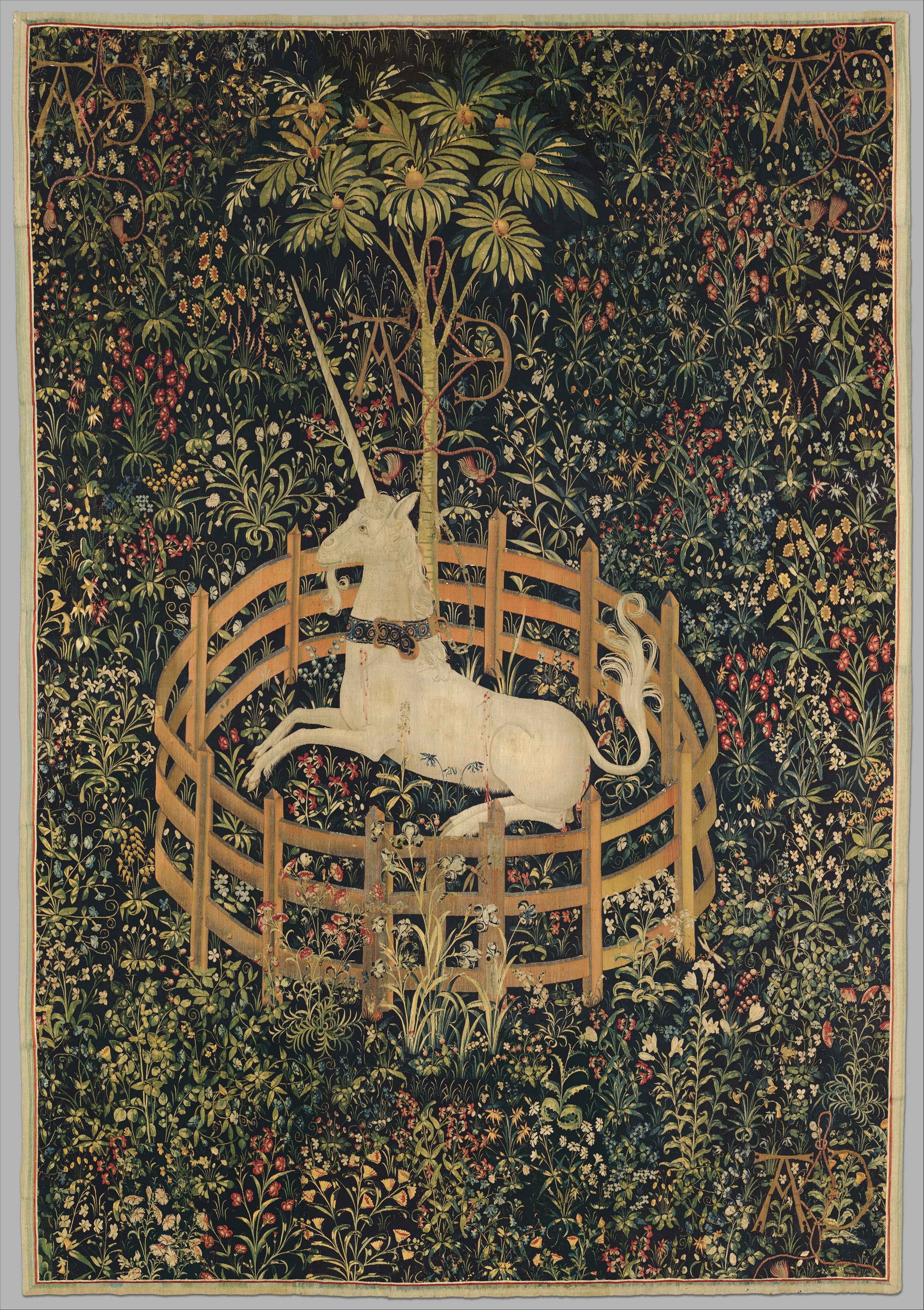
A white unicorn stands beneath a pomegranate tree, inside a fence it could easily clear. A slender gold chain holds it to the trunk, though even that fastening is hardly secure. After the pursuit, the hounds and the spears, this is an unexpectedly quiet image. The tapestry is 368 by 251.5 centimetres and hangs at The Met Cloisters in New York, one of seven works now known as the Unicorn Tapestries. [1]
Wealth worked into the weave
The hangings date from around 1495–1505. Their designs were French; the weaving was done in the southern Netherlands. Wool and silk supplied much of the surface, with silver and gilded thread catching the light. An immense tapestry could dress a room, travel with its owner and proclaim status without a mason touching the walls. These were artworks made for display as much as for looking. [1][2]
In The Hunters Enter the Woods, people and dogs seem almost to dissolve into deep green foliage. The Met counts 101 plant species in this particular hanging, 85 of which have been identified. There is a cherry tree behind the hunters and a date palm beside the hound in the foreground. Across a woven surface more than three metres wide, the plants reward the eye long after the basic action is clear. [2]
A creature that changes meaning
Medieval accounts credited the unicorn with an invincible nature and a healing horn. Another hanging gives that belief a scene of its own: the animal lowers its horn into a stream below a white fountain, while twelve hunters discuss their quarry in the distance. Sage, pot marigolds and orange appear near the water. The museum relates them to period ideas about antidotes. The image records a belief, of course, rather than evidence of a medical cure. [3]
The fenced unicorn invites a gentler interpretation. Pomegranates could signify marriage and fertility, and The Met reads the red marks on the animal's flank as fruit juice rather than blood. The chain might be a bond of affection: the unicorn is able to leave, yet stays. Others have read Christian symbolism in the picture. No single reading settles it. Indeed, the museum cautions that this tapestry may have been designed as an independent image, rather than as the final scene of the hunt. [1]