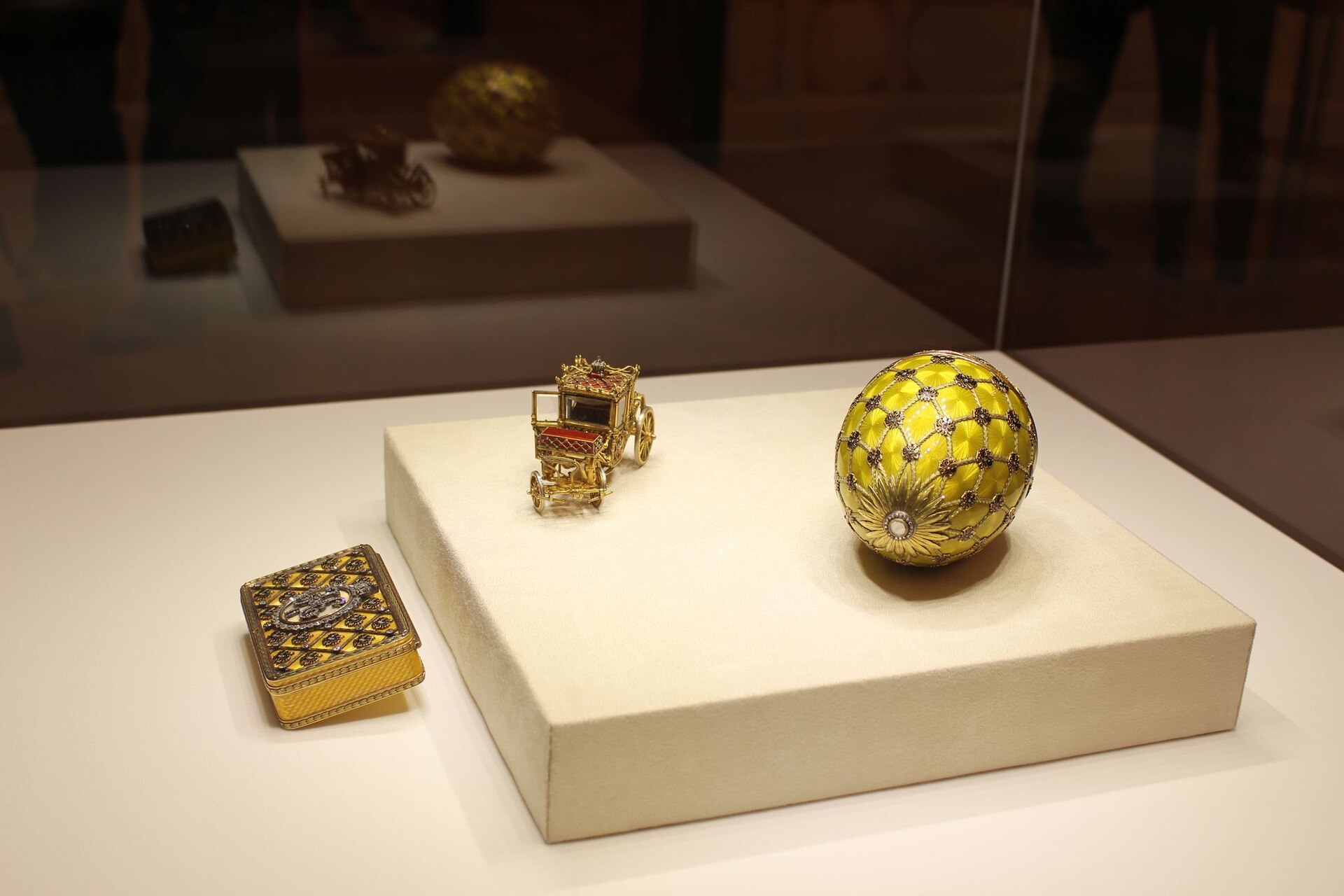
From a distance, Fabergé's Coronation Egg is a jewel in the shape of an egg: golden enamel, black double-headed eagles and diamonds. Its most extraordinary feature, however, lies inside. The 1897 egg conceals a miniature of the coach that carried Alexandra Feodorovna into Moscow for the coronation ceremonies the previous year. It is more than a decorative object; it turns an event into gold and mechanical precision. [1]
The Fabergé Museum in Saint Petersburg attributes the miniature to Georg Stein. According to the museum, he studied the real coach in the court stables to capture its details. The little carriage rolls and turns on its suspension, its doors open and steps fold out. In an object that could easily have impressed from a distance alone, the luxury also lies in functions that reveal themselves only close up. [1]
The egg's surface takes its idea from the gold-brocade mantles worn by the imperial couple at the coronation. Translucent yellow enamel covers a patterned ground, while black eagles, diamonds and green-gold leaves make a dense lattice. Through a diamond on the upper half, the viewer can see the empress's initials; a smaller diamond below reveals the date 1897. Each detail points back to the event the gift was made to commemorate. [1]
The museum's account also draws attention to scale. An immense imperial ceremony is condensed into an object that could be held in the hand, and a real coach becomes a tiny moving surprise. Today the Coronation Egg forms part of the Fabergé Museum's collection. The photographs here show the carriage close up and the egg beside its surprise; they document a museum object, not an item offered for sale. [1]